Disruption and Juxtaposition


Multitasking and random collisions...
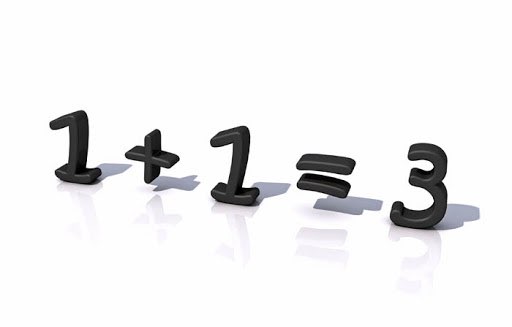
While it seems counterintuitive, increasing ones exposure to random experiences can be useful in attacking creative challenges. Sometimes, it is the association of random, un-allied observations that creates the foundation of a great idea. Fortunately the brain, certainly the creative brain, is always looking to for these associations. Success can be a byproduct of your ability to recognize and explore these random collisions and disparate ideas by fusing them into something that's bigger than both ideas separately.
While it is important to remain focused (and uninterrupted) on a creative challenge, it is equally important to increase ones bandwidth by creating exposure to new(er) or outside stimuli. It is easy to be overwhelmed and feel out of balance in such a pursuit. However, creativity is augmented and super-charged with exposure to random elements and new stimuli.
Consider a world where you regularly subject yourself to as wide a variety of random experiences (preferably not related to the challenge at hand) simply to observe and absorb, knowing that your brain is programmed (we are pattern seekers by nature) to create associations that are unexpected and can’t be controlled.
By example: While working on Blade Runner 2049 I was stuck on how to design Deckard's Spinner crashing into the junkyard and what the sound of its propulsion should be. One morning, as I was driving to the studio, I happened upon a N.I.N. recording that featured a heavily distorted guitar...and in a flash I made a connection between the tone of the descending guitar lines in that song with a sound I remembered from old World War II movies; that of fighter planes making similar screeching sounds as they crashed to earth.
What caused that connection to take place? I have no idea. It’s part of the mystery of the brain. But I do know it exists and works… and I can count on it.
To encourage such random associations, I listen to as a wide variety of audio stimuli as possible...intentionally, during my drive to the studio. I don’t listen to the same radio stations, I don’t listen to the same podcasts, and I don’t indulge in specific genres of music. In fact everything that I do in that process is in “shuffle mode” including the content I keep on my mobile phone, which is filled with a panoply of sound and music that never repeats. My playlists are wide and varied from spoken word, to Bulgarian Choirs to show tunes to my most recent field recordings (and tons of music). I have intentionally created an environment that creates untoward fusions, contrasts and connectivity between sounds/songs/words that allow my brain to connect, sometimes unconsciously, a uniqueness or fusion of sounds otherwise disconnected.
My father gave me advice about staying mentally healthy with this nugget: “You need a change of scenery.” This is simply a way of saying subject yourself to variety, it’s healthy. Just like with your diet. I’m saying use this idea of shuffle-mode and variety in a targeted and critical way to help you focus on creative challenges.
I've written previously about the fun I have playing Sonic Roulette in my Library. When I am stuck on finding the sound for something "we've never heard before", I go to my sound library browser, close my eyes, and type in random letters and hit return. I then listen to whatever comes up. Not infallible but I have had it suggest crazy associations I could not have muscled my way into no matter how hard I tried.
In some sense, these propensities are inevitable and don't need much encouragement. Our brains are wired to seek patterns and find agency. Combine, interject, relate, or juxtapose any two things and the brain will look for a connection. This is explained in a more prosaic and artistic way by the Kuleshov Effect (https://en.wikipedia.org/wiki/Kuleshov_effect). It should be somewhat reassuring, then, that whether you think of yourself as a creative person or not...you are. You can’t help it. You are wired that way. However, you may not have mastered the observational skills needed to recognize, capture and explore the value of juxtaposed unrelated ideas and turn them into great sound design.
Saturday, February 1, 2020