Sound as Composition

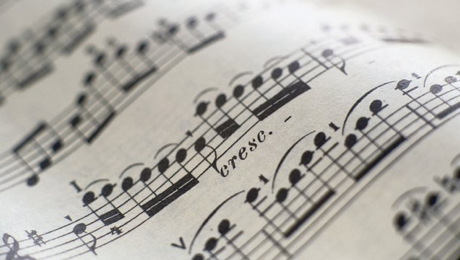
One of the most important aspects of Sound Design and understanding how it works is getting across the idea that, at heart, we are all composers. We simply use timbres that don’t sound like music.
Much as a traditional composer adds recognizable notes and instrumentation to achieve music that isn’t present when a film is captured, so too does the sound designer add the “reality” that isn’t present when film is captured. A critical component to movie-going enjoyment is the successful suspension of disbelief. To achieve this the sound designer creates realities (however bizarre) that tell the story intended by the filmmakers because those are the “realities” of that film
This territory is very nicely in laid out when we describe how “silent” a movie really is when we receive it. The process by which we fill that silence is no less creative, considered, or exact than what a composer creates. We don’t use tonalities that read as melodies yet we achieve the same effect.
I think it’s vital to demonstrate the creative challenges in designing sound for a film. The basis of this demonstration starts with a fundamental assumption: the artist starts with a blank slate and makes choices to tell the story. It is easy to see how a composer makes those choices; should they use an orchestra or a synthesizer? Is this a moment of sadness or joy for the character? It would be revelatory, I believe, for the audience to understand that same sense of composition in sound design and mixing. As it might be quite apparent how different a scene could feel with a different piece of music, so too could we demonstrate this idea with sound. Why do we hear things? Who made those choices? These are the important fundamental questions we want asked.
I’ve been an musician/composer all my life. I have brought all those skills to my work as a Sound Designer. When I embark upon a project, I don’t turn off one set of skills and turn on another, they’re all working. Yet, I don’t believe any musical training is necessary to be a successful one. Bottom line: even if we don’t understand notes and rhythms and dynamics from a musical standpoint, every sound designer, supervisor and mixer thinks in those terms whether self-taught, apprenticed or trained.
I wrote an article for the LA Times a few years ago that demonstrates this analogy and it might be instrumental here:
Bravo Dan Willis!!! (Rap and Music Jan. 17) If your music 101 courses tell you “music is organized sounds and silences that occur in specific time and are reproducible” then I have been composing for you for twenty-three years. My compositions contain meters and rhythms that incrementally change from moment to moment in very sophisticated non-traditional ways, unencumbered by the modern conventions of bars, meter and tempo. My compositions include enharmonic intervals, un-hummable melodies, and found-sound that utilize a panoply of “instruments” and tonalities unrecognizable to most modern “composers” or “musicians”. Yet they are no less engaging, dramatic, or musical. I spend months “orchestrating” every instrument in my work and, unlike most traditional composers, invent or create new instruments for each new work of mine. My works are infinitely reproducible. My works contain structure, are organized, and the deliberate uses of silence, dynamics, pitch, timbre rhythm and timing. Just like Silkk, Stravinsky, or Satchmo. Those artists chose more conventional routes to express the muse within them by working within artistically “acceptable” confines of meter, rhythm, instrumentation, and tonality. I work outside the mainstream. I would love to publish my “sheet” music but no orchestras currently exist to perform it. You can plunk down five bucks to hear it in a movie theatre or you can rent my work in a local video store. You have been manipulated and moved by it your entire film-going life. Do you know what I do? Don’t feel bad, most filmmakers don’t either.
Further to the point, it is important to represent the history of sound designers as performers. Jack Foley, the man for whom Foley is named, was as a pioneer in sound creation gets and right to the heart of it. This idea goes a long way towards taking us out of the realm of equipment and machines and more towards that of performer and artist. This sensibility is wonderfully demonstrated in several old videos of Jimmy MacDonald and his fabulous props for the Disney animates shorts and features. It doesn’t hurt that Jimmy started life as a drummer and brought those musical skills to his work.
Walter Murch has long held that being a great sound designer is like being a great chef. No chef goes into the kitchen without a recipe any more than a composer goes into the recording studio with without a score. So too, does the sound designer go into a mix with a detailed and authored approach to what the sound of the film will be. A great meal always starts with the freshest ingredients. So too, are the sounds made for that production (produce from the market, live performers on the scoring stage). This sound “score” is tailor made or written for the film by the Sound Designer based on the “tastes” of director. No sound (note, or spice) is accidental. Everything heard has a reason for being. I like this concept of consideration: that what we do is creative, orchestrated, and purposeful. There is not a single frame of a soundtrack that doesn’t exist for a reason.
Thursday, January 7, 2016
A study on the artistry of the modern Sound Designer