The Vernacular
The Wilhelm and other Sound jokes
The Wilhelm is in a class by itself, fortunately. It's become a sound designer "in" joke that's finally been outed. Twenty years ago, I might have been able to give you a slightly longer list of stock sounds that were used in films but now it is generally accepted that repeating library sounds is bad form, at least in cinema. The old standbys were Castle Thunder for any lightning strike (From the original FRANKENSTEIN movie), the Universal Phone Ring (an old Bell telephone that was so badly recorded it had a "wow" in it that sounded like it was recorded off a really unstable phonograph player) or Yellow Sky Wind (a really noisy, bland, airy wind that every mix studio used to "fill" a dialog track with when it had a hole in it). These and several others were pretty common 30-40 years ago but now most sound designers, even in Television, use new sound effects.
This MO was partly facilitated by the advent of modestly affordable battery powered sound recorders. One had to, almost by necessity, continually re-use one's precious library "stock" sounds as going out into the field to record was expensive and the equipment was massive and cumbersome. With the advent of the Nagra, Portable DAT machines, and now hard disk based field recorders, it is much easier for anyone to build a custom library of new recordings that is shared by no-one else.
Whereas 40 years ago, you could "hear" the style of any given studios movies because they were all cut from one large, monolithic library that propagated itself from hungry sound editors carefully culling good production sound effects from the dialog tracks recorded for their studios films. Unlike today, if your studio shot a Western, they would send First Unit to not only film it but record it. The natural sounds of the stagecoaches and horses would be captured without intrusive dialog and this material would be carefully mastered and catalogued in the studio sound effects library for any future production. This is how the studio libraries were built. As such for several decades one could hear numerous stock effects in the black and white and early color era of films. Occasionally, the studio would allocate resources for the Sound Department to grab "wild" effects and send out a team to grab sound for it's own sake but this took a large team that included a boom operator, a sound mixer, a recordist to man the optical camera or mag recorder, several grips to schlep and carry, and a large truck to transport all the gear. There are some wonderful archival shots of the Todd AO sound team recording Thunder and Trains for OKLAHOMA. I will try and find them for you. Contrast that futility with the ease we have today with grabbing a digital recorder no larger than our hand and being able to record, surreptitiously if need be, anything at any time in the highest fidelity.
Historically, as Sound Designers gained credibility and recognition, so did the methodologies (fostered by early adopters like Walter Murch and Ben Burtt) that came with them. That included work habits of recording a fresh library of material for every film. Those old studio libraries have gone the way of the dinosaur. You could hear their lack of fidelity as easily as you can hear the optical track hiss and static of an old B/W film. Yet, while everyone strives for freshness and newness, one can still buy a modern, digital equivalent, in the many CD Sound Effects libraries commercially available. In areas of post (production) where budgets are limited and the appreciation of sound is not on-par with cinema (think Jingle houses, commercial studios, and some Television production) these libraries are a god-send. As such, there are probably many oft-heard sound effects from any one of these libraries but, there are so many of them, I don't think it would be easy to identify them.
I think there is one sound even more common than the Wilhelm and it is not so hard to spot and it is not used an in-joke. It was and is used to this day in almost every GM and Ford car commercial. It is used in every panorama or wide-vista shot of a desert, forest, canyon or any wide expanse of nature. It's used in commercials, TV and movies. You have heard it a million times. It is the Red Tailed Hawk:
I HATE this sound, mostly because I have been told to use it by very modern directors who have this in their heads as the sound of distance, loneliness, or nature. As such, it has reached that iconic status of sounds like the baying wolves from HOUNDS OF THE BASKERVILLES that people identify with feeling, not a film.
A good friend of mine is the Sound Designer on the Universal remake of WOLFMAN and he asked me to work on the Werewolf Howl sound. I turned him down. I knew this was an impossible task. It is one of the most iconic sounds in the sound lexicon. You hear it all over the Dracula films or any old horror film when foul play is anticipated or the monster is afoot.
This sound effect has transcended it's origins in film to be associated with just about anything associated with "scary". Even the executives at Universal are struggling to accept any "new" sounds for the Werewolf that don't sound, in part, like this. A tragic lack of creative bravery.
In short, while Sound Designers strive to create iconic sounds for their individual projects, the very notion of this sound identity is anathema. You should strive to make the sounds of your individual project resonate with the audience and create unique synergy yet, this goal should not extend beyond a given project. Can you imagine hearing the light sabres anywhere but in a Star Wars film? You'd know you were being cheated.
I hope this helps.
Monday, October 6, 2008
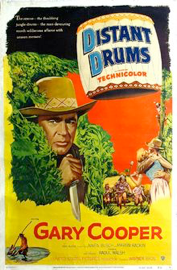
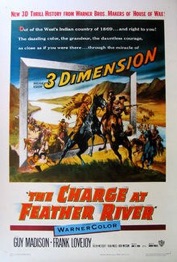
My letter to film professor Frank Gutler regarding the use of sound “cliches” and whether you could hear the “style” of a sound designer by the sounds he/she used.
